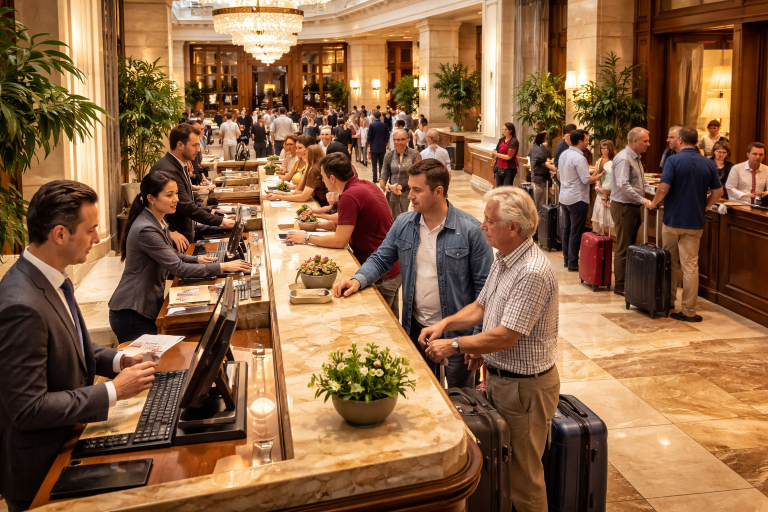
Cuando termina una convención, llega un grupo de crucero o aterriza un bloque de vuelos, las recepciones tradicionales pueden verse desbordadas. Sin sistemas modernos, el resultado es largas colas, clientes frustrados, personal estresado y pérdida de ingresos..
Estadística rápida: Los hoteles pueden ver 2–5 veces el volumen normal de registros durante las horas punta de llegadas.
Comprensión de la compresión de llegada
Recepción típica: De 3 a 6 agentes, entre 20 y 25 huéspedes por hora por agente → 4 agentes procesan entre 80 y 100 huéspedes por hora.
Ejemplo de horas pico de llegada:
600 asistentes a la convención en un hotel
200 tripulantes de aerolíneas después de una rotación
300 invitados a la boda llegan en autobús.
250 pasajeros que se hospedan antes del crucero
Conocimiento: Incluso las recepciones con suficiente personal tienen dificultades con Aumentos de capacidad de 2 a 5 veces, lo que hace que el registro de entrada tradicional sea insuficiente.
Por qué la experiencia de llegada impacta en los ingresos
Los viajeros de eventos y grupos son huéspedes de alto valor: habitaciones premium, servicio de alimentos y bebidas, experiencias y estancias prolongadas.
Malas experiencias a la llegada reducir el gasto discrecional en mejoras y comodidades.
El tendencia bleisureMuchos viajeros de negocios prolongan sus viajes para realizar viajes personales, lo que aumenta sus ingresos.
Estadística rápida: Los huéspedes se muestran frustrados por el gasto al registrarse. 20–30% menos en servicios dentro de la propiedad.
Cinco estrategias que utilizan los hoteles para gestionar la temporada alta de llegadas
1. Preinscripción y preparación de claves
- Habitaciones, llaves y pagos completados antes de la llegada.
- Los responsables de grupo distribuyen las llaves → evitando así que la mayoría de los huéspedes pasen por la recepción.
- Resultado: el tiempo de registro disminuye de 7 a 10 minutos → <90 segundos por invitado.
Destacar: El pre-registro puede Redujeron el tiempo promedio de permanencia en el vestíbulo en 85%. durante la llegada de las olas.
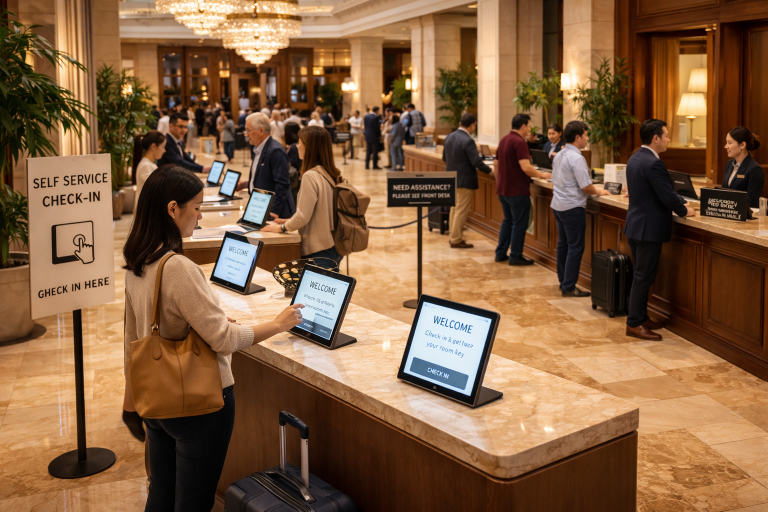
2. Quioscos de autoservicio para el registro de entrada
- Los huéspedes confirman las reservas, seleccionan las habitaciones, pagan y reciben las llaves en menos de 2 minutos.
- Varios quioscos = procesamiento paralelo, con una mejor escalabilidad que la contratación de personal adicional.
- Las ofertas de mejora son constantes; algunos hoteles ven >30% aumento en ventas adicionales.
Consejo: Los quioscos atienden a varios clientes simultáneamente, sin necesidad de hacer cola como en la recepción.
3. Zonas de llegada exclusivas para grupos
- Separa a los grupos grandes de los viajeros individuales.
- Proceso simplificado con llaves, quioscos y mostradores de coordinación preconfigurados.
- Resultado: mayor velocidad de procesamiento, menor congestión en la sala de espera y mejor experiencia para todos.
Cuadro de estadísticas: Informe de grandes hoteles 40–50% registros de grupo más rápidos con zonas dedicadas.
4. Móvil y registro digital
- Los huéspedes se registran, seleccionan habitaciones y reciben llaves móviles antes de la llegada.
- Las campañas de preinscripción realizadas entre 24 y 48 horas antes reducen la afluencia de público en el vestíbulo.
- Popular con viajeros de negocios frecuentes y grupos demográficos más jóvenes.
Dato curioso: La adopción del registro móvil ha crecido >60% entre viajeros de negocios en los últimos 3 años.
5. Llegada inteligente Pronóstico
- Integra datos de hoteles, eventos y transporte para predecir la llegada de las olas.
- Permite estrategias proactivas:
- Habitaciones y llaves preasignadas
- Invitaciones automatizadas para el pre-registro
- Dotación de personal dinámica
- Ofertas personalizadas de mejoras y servicios
Consejo profesional: Los hoteles que utilizan pronósticos predictivos pueden Reduzca la congestión máxima en el vestíbulo hasta en 70%..
Beneficios para el personal
La automatización reduce agotamiento en hora punta, un conductor de Rotación anual de personal de recepción: 60–80%.
El enfoque del personal cambia a dar la bienvenida a los VIP, resolver problemas y crear experiencias que fomenten la fidelización.
Estadística rápida: Hoteles con informe de llegadas automatizado mayores puntuaciones de satisfacción del personal y menor rotación.
En resumen
Los hoteles que dominan la recepción de grandes cantidades combinan:
- Preinscripción
- Quioscos de autoservicio
- Zonas de llegada exclusivas para grupos
- Registro móvil
- Pronóstico predictivo de llegadas
Resultado:
- Registro más rápido, menos colas
- Mayores ingresos por mejoras, alimentos y bebidas, y servicios.
- Personal más feliz y productivo
- Reputación como hotel listo cuando más importa