How hotels on destination strips are losing the local economy to national platforms, and how a $399/month fix changes everything.
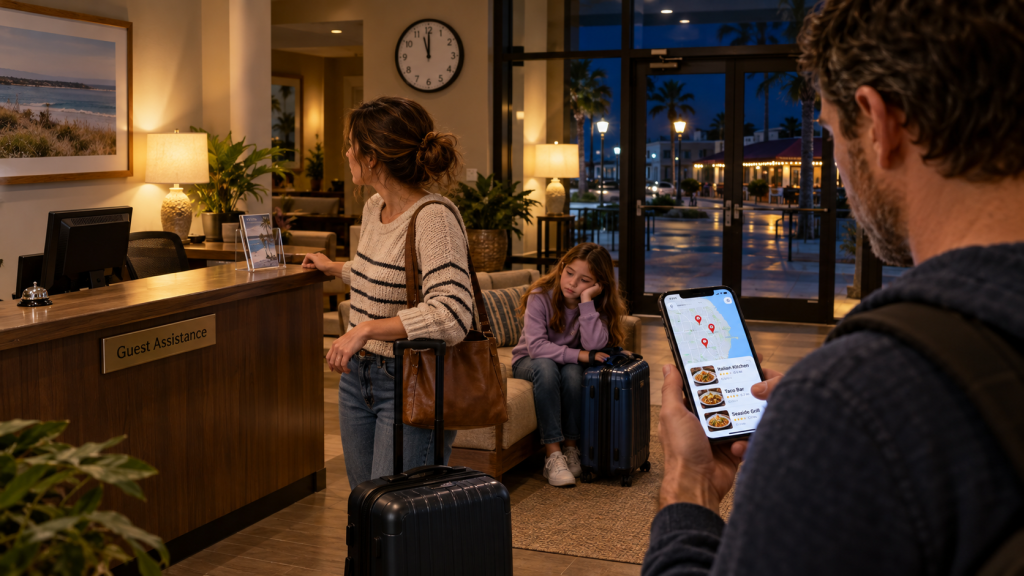
Walk into almost any hotel on the Virginia Beach strip tonight and you’ll find the same visitor engagement strategy: a brochure rack tucked beside the elevator, half-full, mostly ignored. Down the hall, a couple is asking the front desk where to eat. The answer: “there’s a lot of options on the boardwalk.” They pull out their phones. Google takes it from there.
That moment, the Google moment, is where hundreds of dollars in local spend leaves the destination ecosystem. The restaurant they find may be two miles away because it paid for Google Ads. The great local spot 200 feet down the boardwalk gets nothing from that guest’s visit.
This is not a technology problem.
It’s a visibility problem.
And it’s happening in every hotel, in every destination market, thousands of times a day.
WHAT’S HAPPENING Guest opens Google in your lobby to find dinner | WHERE IT GOES Yelp, TripAdvisor, or OpenTable captures the booking | WHAT YOU GET Zero data. Zero revenue. Zero credit for the referral. |

THE VIRGINIA BEACH PROBLEM, AND IT’S EVERYWHERE
Virginia Beach hosts approximately 7 million visitors a year. The oceanfront strip runs 35 blocks, lined with hundreds of restaurants, bars, surf shops, and attractions. Average daily spend per visitor party? $400 to $600 on food, entertainment, and activities.
Nearly every hotel on that strip has a brochure rack. Almost none have any system connecting guests to local businesses on the boardwalk. No promotions. No real-time events calendar. No way for a guest to know the live music venue two blocks away is about to start, or that the seafood spot they walked past is offering 20% off tonight.
The restaurants on that strip are spending money on Google Ads trying to reach visitors who are already standing in the hotel across the street. Money flowing out of the local economy to fund national platforms, while the hotels that could be the most efficient referral channel do nothing.
WHAT “NO CONCIERGE” ACTUALLY COSTS
Full-service hotels have a concierge who knows the neighborhood and earns referral commissions. It works, when it’s staffed. The vast majority of hotels on beach and mountain destination strips are select-service or independent properties. No concierge on evenings and weekends. No one to recommend restaurants at midnight when a family arrives hungry.
Only 11% of hotel guests use a physical brochure rack, down from 34% in 2010.
The rest go straight to Google, and you lose the referral, the data, and any chance at a commission.
THE DISCOVERY GAP LOCAL RESTAURANTS ARE PAYING FOR
Here’s what the average restaurant on a destination strip spends to reach guests who are already in the immediate area:
× Status Quo
| ✓ With DEP Platform
|
This is why local businesses will advertise on the platform. Not because we asked them to, because they’re currently spending more than this to reach a less targeted audience with less measurable return.
WHAT THE HOTEL ACTUALLY EARNS FROM THIS
The platform is not just a guest amenity. It’s a revenue layer the hotel hasn’t had before.
THE DESTINATION NETWORK EFFECT
Here’s where the model gets genuinely powerful: when multiple hotels on a strip deploy the platform, the value compounds for everyone. A restaurant advertising on the DEP isn’t reaching guests from one hotel, they’re reaching every hotel on the network. More advertising revenue flows back as hotel revenue share. The destination as a whole gets better at surfacing its own economy.
THE VIRGINIA BEACH NETWORK MODEL
→ 10 hotels on the strip each deploy the platform, 40 kiosks across the boardwalk area
→ Combined footprint reaches approximately 85% of destination visitors at point of decision
→ 200+ local businesses compete for advertising placement on the network
→ Average restaurant ad spend: $400 to $600/mo for featured placement across the strip
→ Hotels earning $600 to $1,200/month in ad revenue share at network scale
→ CVB co-invests in destination content, shared cost across all properties

THE $399 QUESTION
The Starter tier for an independent hotel is $399/month for the platform plus a hardware lease. In most destination markets, the first two or three local business advertising agreements cover the entire cost. The hotel is net-zero or profitable before accounting for any guest experience or review score benefits.
The brochure rack costs nothing and earns nothing. The platform costs $399 and starts earning back within 90 days. The question isn’t whether the math works, it’s whether you want to be the property that figured it out first.See how it works for your property. Platform overview, pricing, and a 90-day ROI model built around your market. To request a property assessment, call 833-300-6664 or email info@trueomni.com