Why the shift from brochure hubs to experience ecosystems is reshaping travel engagement.
Even before smartphones and instant search became the norm, travelers were evolving. Today’s visitors aren’t satisfied with shelves of pamphlets and static maps—they want guidance, immersion, and inspiration. That’s why the traditional Visitor Information Center (VIC) model—the quiet hall lined with brochures and staffed desks—is losing relevance in a world where experiences, not handouts, drive engagement.
Why Traditional Visitor Centers Are Declining
For decades, VICs were the primary touchpoint for destination discovery. They provided wayfinding, printed recommendations, and face-to-face assistance. But several trends have eroded their effectiveness:
Pre-travel planning has shifted online: Travelers arrive informed, having already explored attractions on their phones.
Brochures are expensive and quickly outdated: Physical collateral can’t adapt in real time.
Static, one-size-fits-all information can feel irrelevant: Today’s visitor expects personalized guidance.
At the same time, resilience in the travel sector has hinged on domestic experiences. In 2023, U.S. domestic travel generated roughly $1.2 trillion in visitor spending, with Americans taking billions of person-trips within the country. Domestic leisure travel still accounts for the vast majority of total travel demand and economic impact.
This shift toward self-directed discovery and personalized experiences means VICs that still rely on static print are increasingly out of step with traveler expectations.
What the Retail Pop-Up Revolution Teaches Us
Look at how retail reinvented itself in the last decade. Pop-up stores and experience-driven activations didn’t thrive because products were harder to find—they thrived because they engaged customers. Successful pop-ups create urgency, offer interaction, and become shareable moments in themselves.
These same principles apply to modern visitor engagement:
Interactive discovery beats static browsing.
Memorable moments beat passive receipt of information.
Personalization beats generic guidance.
If a visitor’s first interaction with a destination feels like a curated experience—rather than a brochure rack—they’re far more likely to engage deeper with the destination.
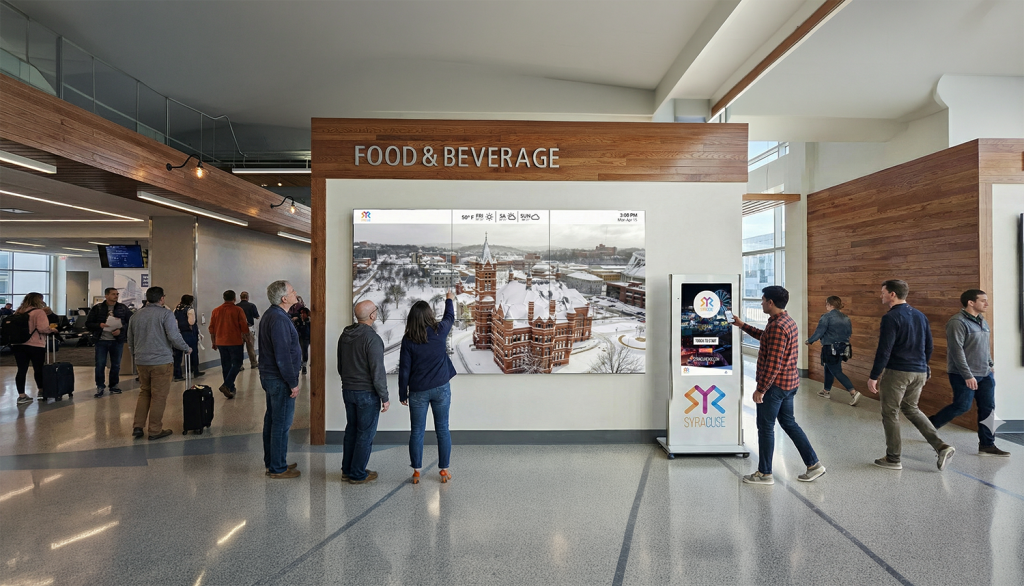
Airports and Malls: Turning Transit into Destinations
Another signal of how expectations have changed comes from airports and malls—spaces once valued only for their utility. Today:
Airports integrate local showcases, interactive wayfinding, and curated cultural moments.
Malls reposition themselves as lifestyle destinations with events, dining, and entertainment zones.
These environments prove a simple truth: spaces where people spend time matter more when they deliver experience rather than just information.
The Rise of Experience-Driven Engagement
Travelers today are driven by experiences. According to recent tourism data:
The U.S. travel and tourism industry supported millions of jobs and generated over $2 trillion in economic output in recent years.
International arrivals have been projected to rise again in coming years, with the number of inbound visitors expected to exceed pre-pandemic levels by 2026.
But foreign visitation patterns remain volatile, and engagement strategies have to work across all visitor types—not just international tourists. That’s where experience-driven engagement shines: it creates value at every stage of the traveler journey, whether someone is exploring a destination for the first time or rediscovering a familiar place.
Experience-driven engagement means:
Digital, interactive touchpoints over paper handouts
Personal recommendations over generic lists
Real-time adjustments instead of fixed displays
And it shows up everywhere—from digital kiosks with dynamic content to mobile experiences that guide visitors by interest and context.

Introducing the Experience Center
As destinations look ahead, the traditional Visitor Information Center is evolving into something far more dynamic: the Experience Center.
An Experience Center isn’t just a place to get information—it’s a place to inspire engagement.
Key characteristics include:
Digital first, content-rich: interactive displays, mobile integrations, and adaptive storytelling
Personalized journeys: recommendations based on interests, time of day, or visitor profiles
Flexible content: adaptable for seasons, events, cultural highlights, and local partnerships
Rather than existing as a static “hub of brochures,” an Experience Center becomes part of the destination itself—a place that draws visitors in, sparks curiosity, and drives exploration. Call us at 833-300-6664 or email us at info@trueomni.com and we will help you!